Our AGI Architecture – A Modular Control System for Thinking Machines
At LSDinfotech, we believe AGI should not just predict language — it should think, evaluate, adapt, and decide. Our architecture is built from first principles and designed for modular expansion. It integrates memory, perception, behavior, and cognition under a supervisory control layer. The result is a system that behaves more like a thinking mind than a chat engine.
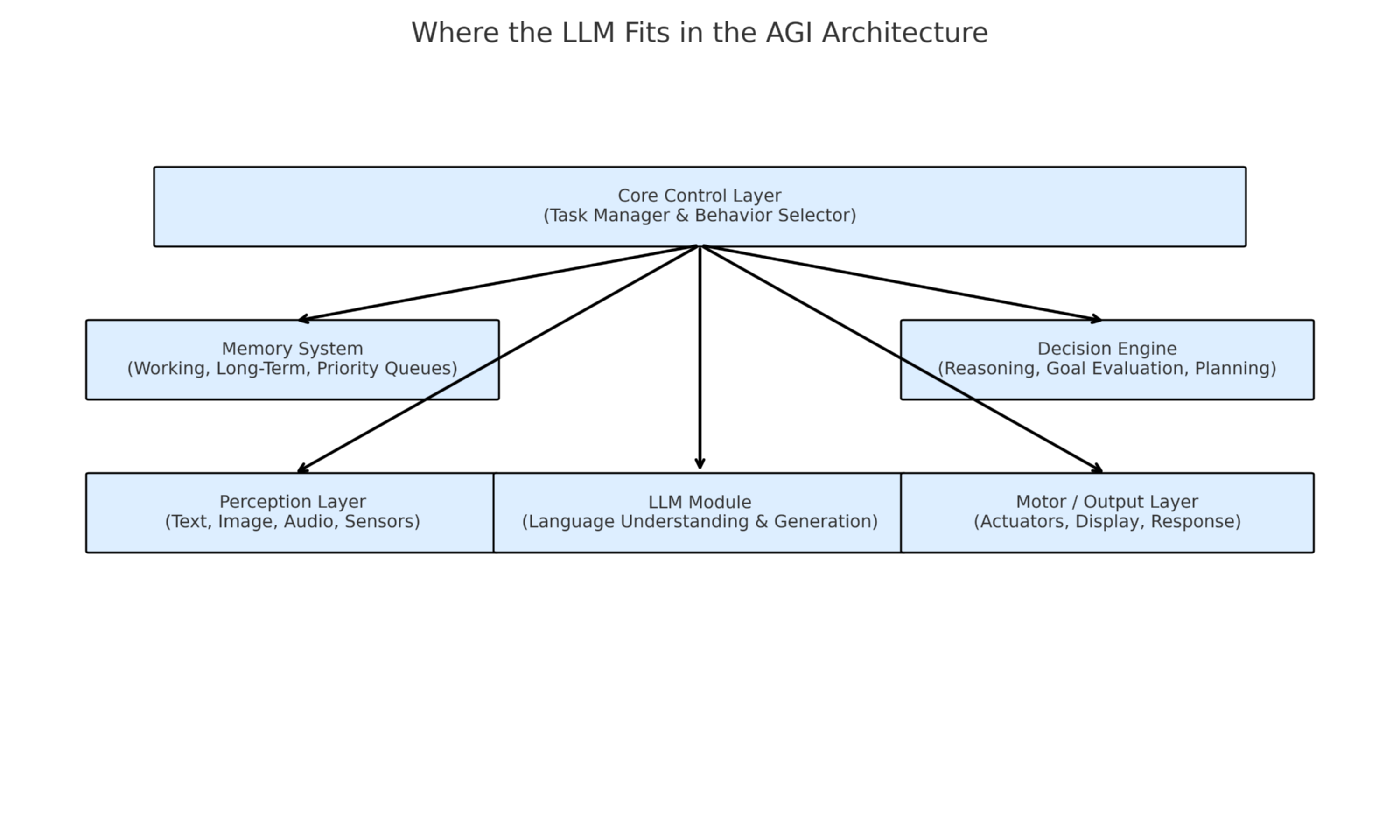
System Breakdown
Core Control Layer
This is the executive manager of the system. It decides which modules to engage, in what sequence, and under what goals. All modules — perception, cognition, memory, language, behavior — operate under its direction.
Perception Layer
The system can ingest input from sensors, structured data, or unstructured text. This layer prepares the data for higher processing.
Memory System
Modular memory stores include episodic memories (events), semantic facts, working memory for tasks, and belief structures. These memory types influence behavior selection and learning.
Cognitive Model Matrix
This layer models mental behavior — internal simulations, outcome prediction, reflection, and evaluation. It allows the system to “think” before acting.
Behavior Matrix
This matrix defines the system's external capabilities — verbal, physical, procedural. Each behavior is tied to context, memory, and priority.
LLM Module
Used for natural language understanding and generation. It is not the mind — it is a tool used by the mind.
Output Layer
Where actions are expressed. This could be through speech, writing, control signals, or other system interactions.
Design Principles
Closing Statement
This is not a conventional AI system. It’s an evolving intelligence framework designed to grow in capability over time. With each new behavior, model, or cognitive routine added, the system becomes more autonomous, more insightful — more like a mind.
At LSDinfotech, we believe AGI should not just predict language — it should think, evaluate, adapt, and decide. Our architecture is built from first principles and designed for modular expansion. It integrates memory, perception, behavior, and cognition under a supervisory control layer. The result is a system that behaves more like a thinking mind than a chat engine.
System Breakdown
Core Control Layer
This is the executive manager of the system. It decides which modules to engage, in what sequence, and under what goals. All modules — perception, cognition, memory, language, behavior — operate under its direction.
Perception Layer
The system can ingest input from sensors, structured data, or unstructured text. This layer prepares the data for higher processing.
Memory System
Modular memory stores include episodic memories (events), semantic facts, working memory for tasks, and belief structures. These memory types influence behavior selection and learning.
Cognitive Model Matrix
This layer models mental behavior — internal simulations, outcome prediction, reflection, and evaluation. It allows the system to “think” before acting.
Behavior Matrix
This matrix defines the system's external capabilities — verbal, physical, procedural. Each behavior is tied to context, memory, and priority.
LLM Module
Used for natural language understanding and generation. It is not the mind — it is a tool used by the mind.
Output Layer
Where actions are expressed. This could be through speech, writing, control signals, or other system interactions.
Design Principles
- Modular: Each function is replaceable and testable.
- Human-Inspired: Based on observable features of cognition.
- API-Driven: Works with external models and services.
- Transparent: Internals are traceable and explainable.
Closing Statement
This is not a conventional AI system. It’s an evolving intelligence framework designed to grow in capability over time. With each new behavior, model, or cognitive routine added, the system becomes more autonomous, more insightful — more like a mind.
@ 2025 Otto L. Lecuona